Gustav Klimt (1862-1918) was an Austrian symbolist painter and a central figure in the Vienna Secession movement, celebrated for his innovative style and striking use of symbolism. Born on July 14, 1862, in Baumgarten, Vienna, Klimt was the second of seven children in a working-class family. His father, Ernst Klimt, a gold engraver, significantly influenced Gustav's later use of gold leaf in his iconic works.
Klimt began his artistic journey in 1876 at the Vienna School of Arts and Crafts (Kunstgewerbeschule), where he trained in architectural painting. Early in his career, he collaborated with his brother Ernst and fellow artist Franz Matsch in a group known as the "Company of Artists," undertaking commissions for murals in theaters and public buildings. Their work adhered to conventional aesthetics of the time, earning them recognition within academic art circles.
By the 1890s, Klimt had grown dissatisfied with traditional artistic norms. He co-founded the Vienna Secession in 1897, a movement that rejected academic conservatism and embraced modernism and experimental art. This period marked a turning point in his career, as his style evolved into a blend of symbolism, eroticism, and ornamental detail. Klimt’s works during this era often explored themes of love, sexuality, and mortality.
One of Klimt’s most renowned works, The Kiss (1907-1908), exemplifies his "Golden Phase," characterized by the extensive use of gold leaf and intricate patterns. The painting's intimate subject matter and decorative opulence epitomize his fusion of symbolism and sensuality, securing its place as an enduring masterpiece.
Despite his success, Klimt’s work was controversial, often criticized for its erotic content. However, his ability to balance provocative themes with exquisite artistry garnered widespread acclaim. Klimt’s legacy is evident in his influence on modern art, where his bold exploration of human emotion and decorative innovation continues to inspire.
Klimt died on February 6, 1918, leaving behind a transformative body of work that bridged the gap between traditional art and modernism, cementing his status as a pioneer of 20th-century art.
Gustav Klimt: Pioneer of Symbolism and Modern Art
The term "history of painting" refers to artworks depicting scenes drawn from classical sources like mythology, the Bible, and legends. This history provides valuable insights into how people and societies have interacted with the art of painting. Studying painting history is essential, as it reveals the evolution of artistic expression and cultural values. The past shapes the present, which, in turn, influences the future.
Showing posts with label painter. Show all posts
Tuesday, December 10, 2024
Monday, May 6, 2024
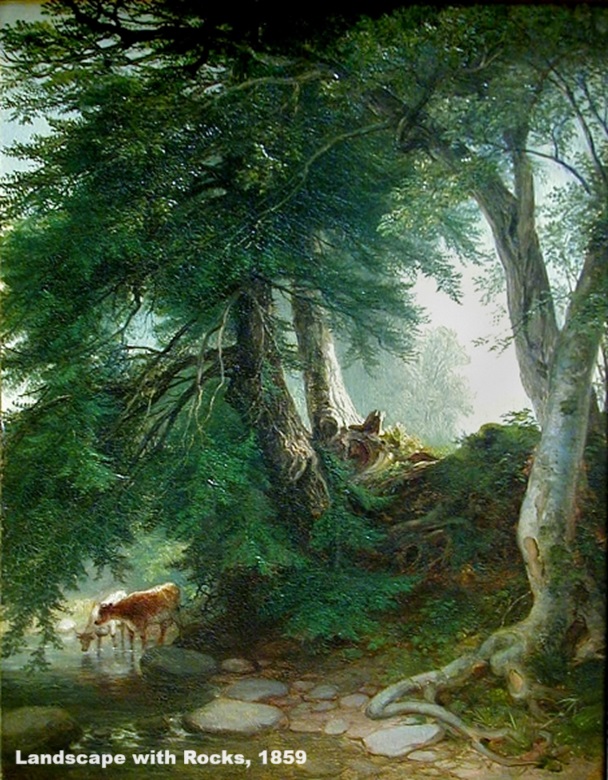
Asher Brown Durand: Pioneering American Landscape Painter
Asher Brown Durand, widely regarded as the "father of American landscape painting," made profound contributions to the art world during the 19th century. Born on August 21, 1796, in Maplewood, New Jersey, Durand's artistic journey was marked by innovation and a deep appreciation for nature.
Durand initially learned engraving from his father, a skilled watchmaker and silversmith, before embarking on an apprenticeship with New Jersey engraver Peter Maverick from 1812 to 1817. This experience laid the groundwork for Durand's future artistic endeavors. By 1817, he had partnered with Maverick, establishing a branch of the firm in New York City, where he soon gained recognition for his intricate engravings.
However, it was in the early 1830s that Durand's career took a pivotal turn. Inspired by fellow artist Thomas Cole and supported by influential patron Luman Reed, Durand transitioned from engraving to painting, a shift that would define his legacy. His paintings began to reflect the ethos of the burgeoning Hudson River School, a movement characterized by its celebration of American landscapes.
One of Durand's most acclaimed works, "Kindred Spirits" (1849), epitomizes his artistic prowess. This painting, a tribute to the late Thomas Cole, portrays Cole and poet William Cullen Bryant amidst the picturesque Catskills Mountains. It encapsulates the romanticized vision of nature that defined the Hudson River School.Durand's artistic vision extended beyond mere landscapes. His 1853 masterpiece, "Progress," commissioned by a railroad executive, depicts America's transformation from wilderness to civilization. The painting unfolds like a historical narrative, illustrating the country's evolution with elements such as roads, telegraph wires, and bustling industry, juxtaposed against the serene backdrop of nature.
In addition to his artistic endeavors, Durand played a pivotal role in shaping American art institutions. He served as the president of the National Academy of Design, leaving an indelible mark on the American art scene.
Asher Brown Durand passed away on September 17, 1886, in Maplewood, New Jersey, leaving behind a profound legacy. His contributions not only defined an era of American art but also paved the way for future generations of landscape painters. Durand's enduring influence continues to resonate, underscoring his significance as a pioneer of American artistic expression.
Asher Brown Durand: Pioneering American Landscape Painter
Durand initially learned engraving from his father, a skilled watchmaker and silversmith, before embarking on an apprenticeship with New Jersey engraver Peter Maverick from 1812 to 1817. This experience laid the groundwork for Durand's future artistic endeavors. By 1817, he had partnered with Maverick, establishing a branch of the firm in New York City, where he soon gained recognition for his intricate engravings.
However, it was in the early 1830s that Durand's career took a pivotal turn. Inspired by fellow artist Thomas Cole and supported by influential patron Luman Reed, Durand transitioned from engraving to painting, a shift that would define his legacy. His paintings began to reflect the ethos of the burgeoning Hudson River School, a movement characterized by its celebration of American landscapes.
One of Durand's most acclaimed works, "Kindred Spirits" (1849), epitomizes his artistic prowess. This painting, a tribute to the late Thomas Cole, portrays Cole and poet William Cullen Bryant amidst the picturesque Catskills Mountains. It encapsulates the romanticized vision of nature that defined the Hudson River School.Durand's artistic vision extended beyond mere landscapes. His 1853 masterpiece, "Progress," commissioned by a railroad executive, depicts America's transformation from wilderness to civilization. The painting unfolds like a historical narrative, illustrating the country's evolution with elements such as roads, telegraph wires, and bustling industry, juxtaposed against the serene backdrop of nature.
In addition to his artistic endeavors, Durand played a pivotal role in shaping American art institutions. He served as the president of the National Academy of Design, leaving an indelible mark on the American art scene.
Asher Brown Durand passed away on September 17, 1886, in Maplewood, New Jersey, leaving behind a profound legacy. His contributions not only defined an era of American art but also paved the way for future generations of landscape painters. Durand's enduring influence continues to resonate, underscoring his significance as a pioneer of American artistic expression.
Asher Brown Durand: Pioneering American Landscape Painter
Tuesday, March 22, 2022
Kamāl ud-Dīn Behzād – Persian painter
He was born in 1450 and lived most of his life in Herat, a city in modern-day western Afghanistan and an important center of trade and the Timurid Empire's cultural and economic capital. He died in 1535 in Herat (Safavid Empire), Afghanistan.
Kamāl ud-Dīn Behzād, also known as Kamal al-din Bihzad or Kamaleddin Behzad, was a Persian painter, proverbial for his skill, active in Herat during the reign of the Timurid Ḥosayn Bāyqarā (875-912/1470-1506).
Orphaned at an early age, he was raised in the city of Herāt by the painter Mīrak Naqqāsh, who enjoyed the patronage of the Timurid princes who ruled the city. Behzād studied under his guardian and in 1486 became head of the Herāt academy, a post he held until 1506.
He was very prominent in his role as a director of a workshop in the Herat Academy as well as his position in the Royal Library in the city of Herat.
Behzad's fame reached its zenith during this period. A fable states that during the Battle of Chaldiran in 1514, in which the Ottoman Turks defeated the Persian army, Shah Ismail I hid Behzad in a cave as a treasure.
His art includes masterful use of value and individuality of character, with one of his most famous pieces being "The Seduction of Yusuf”' from Sa'di's Bustan of 1488.
Kamāl ud-Dīn Behzād – Persian painter
Kamāl ud-Dīn Behzād, also known as Kamal al-din Bihzad or Kamaleddin Behzad, was a Persian painter, proverbial for his skill, active in Herat during the reign of the Timurid Ḥosayn Bāyqarā (875-912/1470-1506).
Orphaned at an early age, he was raised in the city of Herāt by the painter Mīrak Naqqāsh, who enjoyed the patronage of the Timurid princes who ruled the city. Behzād studied under his guardian and in 1486 became head of the Herāt academy, a post he held until 1506.
He was very prominent in his role as a director of a workshop in the Herat Academy as well as his position in the Royal Library in the city of Herat.
Behzad's fame reached its zenith during this period. A fable states that during the Battle of Chaldiran in 1514, in which the Ottoman Turks defeated the Persian army, Shah Ismail I hid Behzad in a cave as a treasure.
His art includes masterful use of value and individuality of character, with one of his most famous pieces being "The Seduction of Yusuf”' from Sa'di's Bustan of 1488.
Kamāl ud-Dīn Behzād – Persian painter
![]() |
Kamal-ud-din Bihzad - Construction of the fort of Kharnaq |
Thursday, June 3, 2021
Ford Madox Brown: British painter
Ford Madox Brown (16 April 1821 – 6 October 1893) is a painter most often associated with Pre-Raphaelite Brotherhood. Madox Brown was born in Calais and did not live permanently in England.
He had begun his apprenticeship to painting at Bruges, at Ghent, and for about three years at Antwerp. Having completed his art training, and after the death of his mother, in 1839, and his sister, in 1840, Brown decided to move to Paris, then the artistic center of Europe, where he remained until 1844.
Brown’s first works combining a medieval subject with a neo-medieval style were Wycliffe Reading his Translation of the Bible and Chaucer reading the Legend of Custance to Edward III.
His early paintings and drawings are more problematic and do not fit so easily into this image of Brown as an 'English' artist. A brief period followed in Rome where Brown became influenced by the Italian masters and leaned towards painting dramatic scenes with a darkened, reduced colour palette.
Brown was also involved in the collective creation of pseudo-medieval furniture and decorative objects. King René’s Honeymoon Cabinet aimed at reviving a time when labor and art were believed to be in harmony thanks to the influence of the Church. During his last creative decades, Brown painted various medieval subjects for the city of Manchester, in a curvilinear, almost Art-Nouveau style.
One of Brown’s best-known paintings is titled ‘The Last of England’ (1852-55).
Ford Madox Brown: British painter
He had begun his apprenticeship to painting at Bruges, at Ghent, and for about three years at Antwerp. Having completed his art training, and after the death of his mother, in 1839, and his sister, in 1840, Brown decided to move to Paris, then the artistic center of Europe, where he remained until 1844.
Brown’s first works combining a medieval subject with a neo-medieval style were Wycliffe Reading his Translation of the Bible and Chaucer reading the Legend of Custance to Edward III.
His early paintings and drawings are more problematic and do not fit so easily into this image of Brown as an 'English' artist. A brief period followed in Rome where Brown became influenced by the Italian masters and leaned towards painting dramatic scenes with a darkened, reduced colour palette.
Brown was also involved in the collective creation of pseudo-medieval furniture and decorative objects. King René’s Honeymoon Cabinet aimed at reviving a time when labor and art were believed to be in harmony thanks to the influence of the Church. During his last creative decades, Brown painted various medieval subjects for the city of Manchester, in a curvilinear, almost Art-Nouveau style.
One of Brown’s best-known paintings is titled ‘The Last of England’ (1852-55).
Ford Madox Brown: British painter
![]() |
| Work by Ford Madox Brown |
Tuesday, February 9, 2021
Armin Reumann (1889-1952)
Malers Armin Reumann, German post-impressionist painter was born in Sonneberg.
In 1907 Reumann moved to Munich and studied at the Munich Art Academy and from 1910 he participated in exhibitions. He received first orders of Duke George II and Prince Ernst of Saxe-Meiningen.
His landscapes, portraits, still-lifes and interiors are all characterized by the spontaneous and intuitive capturing of a mood, of an atmospheric landscape. The most recent auction is a painting sold in 2020.
Armin Reumann (1889-1952)
In 1907 Reumann moved to Munich and studied at the Munich Art Academy and from 1910 he participated in exhibitions. He received first orders of Duke George II and Prince Ernst of Saxe-Meiningen.
His landscapes, portraits, still-lifes and interiors are all characterized by the spontaneous and intuitive capturing of a mood, of an atmospheric landscape. The most recent auction is a painting sold in 2020.
Armin Reumann (1889-1952)
Tuesday, September 22, 2020
Sepp Hilz (1906-1967): German painter
Sepp Hilz was born in Northern Bavaria on October 22, 1906. His first teachings came from his father George Hilz, a painter and notable restorer of churches.
From 1921 to 1927 he studied in Munich at the Kunstgewerbeschule and at the private school of graphic art of Prof. Moritz Heymanns. From 1930 on he painted mostly landscapes in the style of Wilhelm Leibl and thus he became known as a ‘Bauernmaler’ (farmer painter).
Sepp began his work as a painter in his studio in Munich working mainly for regional exhibitions and displays and continued to copy the works of the great Flemish painters like Rembrandt, Vermeer, van Delft and Brouwer. Until the end of the 1920's Sepp dedicated himself to his studies and paintings of churches in the Upper Bavarian country.
Sepp Hilz was famous for his crisp portraits and nudes. Besides an obvious nod to the German renaissance, there is freshness and technical mastery in his work.
Sepp Hilz's work has been offered at auction multiple times, with realized prices ranging from $2,103 USD to $3,740 USD, depending on the size and medium of the artwork.
Sepp Hilz (1906-1967): German painter
From 1921 to 1927 he studied in Munich at the Kunstgewerbeschule and at the private school of graphic art of Prof. Moritz Heymanns. From 1930 on he painted mostly landscapes in the style of Wilhelm Leibl and thus he became known as a ‘Bauernmaler’ (farmer painter).
Sepp began his work as a painter in his studio in Munich working mainly for regional exhibitions and displays and continued to copy the works of the great Flemish painters like Rembrandt, Vermeer, van Delft and Brouwer. Until the end of the 1920's Sepp dedicated himself to his studies and paintings of churches in the Upper Bavarian country.
Sepp Hilz was famous for his crisp portraits and nudes. Besides an obvious nod to the German renaissance, there is freshness and technical mastery in his work.
Sepp Hilz's work has been offered at auction multiple times, with realized prices ranging from $2,103 USD to $3,740 USD, depending on the size and medium of the artwork.
Sepp Hilz (1906-1967): German painter
![]() |
| Rural Trilogy by Sepp Hilz |
Tuesday, June 23, 2020
Étienne Terrus – French painter
Étienne Joseph Mathieu Terrus was born on 22 September 1857 in Elne, Pyrénées-Orientales and died 0n 22 June 1922 in Elne, although he lived most of his life in Roussillon, also in the Pyrenees. He was a French painter.
Etienne Terrus was one of water-colourist who lived from 1857 to 1922 was barely known outside of his native town of Elne, near Perpignan.
Despite the fact he studied at age 16 at the École des BeauxArts in Paris and was friends with Henri Matisse and Aristide Maillol, Terrus is little known outside south-western France’s Roussillon region, near the borders with Spain and Andorra. Even in the town where he was born in 1857 it can be hard to find any sign of the painter.
Étienne Terrus – French painter
Etienne Terrus was one of water-colourist who lived from 1857 to 1922 was barely known outside of his native town of Elne, near Perpignan.
Despite the fact he studied at age 16 at the École des BeauxArts in Paris and was friends with Henri Matisse and Aristide Maillol, Terrus is little known outside south-western France’s Roussillon region, near the borders with Spain and Andorra. Even in the town where he was born in 1857 it can be hard to find any sign of the painter.
Étienne Terrus – French painter
Thursday, December 5, 2019
Pierre Auguste Cot: French painter of the Academic Classicism school
Pierre-Auguste Cot's L'Orage or The Storm has long been regarded, at least by Americans aware of its presence at The Metropolitan Museum of Art, as a symbol of late nineteenth-century French academicism.
Pierre Auguste Cot (February 17, 1837 - July 1883) was born in Bédarieux, and initially studied at l'Ecole des Beaux-Arts in Toulouse before going to Paris.
He studied under Leon Cogniet, Alexandre Cabanel and William-Adolphe Bouguereau. From the 1870s, his popularity grew quickly.
He enjoyed the protection of the academic sculptor Francisque Duret, whose daughter he married, and of William Bouguereau, with whom he had also worked. In the 187os, he became a fashionable portraitist.
In 1874 he was made Chevalier of the Legion of Honour. He created several works of lasting popularity, including Le Printemps, featuring two young lovers sitting upon a swing, and The Storm.
Pierre-Auguste Cot’s painting The Storm tells a story of two lovebirds running from nature’s work. This painting shows many Visual Elements and Principles but the boldest would be color, emphasis/focal point, unity, simplicity, depth, and movement.
He died in Paris at the age of 46. He is buried at the Père Lachaise Cemetery.
His works including;
*Dionysia (1870), Chi-Mei Museum, Taiwan
*Ophelia (1870)
*The Gypsy or La Bohémienne (1871)
*Spring or Le Printemps (1873), Metropolitan Museum of Art, New York City
*The Storm or La Tempête (1880), Metropolitan Museum of Art
*The Reading Light or La Liseuse (about 1880)
*Portrait of Madame Mas (1882)
*Mireille (1882), Musée Fabre, Montpellier
*Charity for My Sister, Wolverhampton Art Gallery
Pierre Auguste Cot: French painter of the Academic Classicism school
Pierre Auguste Cot (February 17, 1837 - July 1883) was born in Bédarieux, and initially studied at l'Ecole des Beaux-Arts in Toulouse before going to Paris.
He studied under Leon Cogniet, Alexandre Cabanel and William-Adolphe Bouguereau. From the 1870s, his popularity grew quickly.
He enjoyed the protection of the academic sculptor Francisque Duret, whose daughter he married, and of William Bouguereau, with whom he had also worked. In the 187os, he became a fashionable portraitist.
In 1874 he was made Chevalier of the Legion of Honour. He created several works of lasting popularity, including Le Printemps, featuring two young lovers sitting upon a swing, and The Storm.
Pierre-Auguste Cot’s painting The Storm tells a story of two lovebirds running from nature’s work. This painting shows many Visual Elements and Principles but the boldest would be color, emphasis/focal point, unity, simplicity, depth, and movement.
He died in Paris at the age of 46. He is buried at the Père Lachaise Cemetery.
His works including;
*Dionysia (1870), Chi-Mei Museum, Taiwan
*Ophelia (1870)
*The Gypsy or La Bohémienne (1871)
*Spring or Le Printemps (1873), Metropolitan Museum of Art, New York City
*The Storm or La Tempête (1880), Metropolitan Museum of Art
*The Reading Light or La Liseuse (about 1880)
*Portrait of Madame Mas (1882)
*Mireille (1882), Musée Fabre, Montpellier
*Charity for My Sister, Wolverhampton Art Gallery
Pierre Auguste Cot: French painter of the Academic Classicism school
Saturday, October 26, 2019
Jean-Léon Gérôme (1824-1904)
Jean-Léon Gérôme was born in Vesoul (Haute-SaOne) on May 11, 1824. He was a major French painter. The son of a provincial goldsmith, Gérôme was accepted into the Paris studio of the painter Paul Delaroche, where he studied until 1843.
The painting "The Cock Fight" exhibited at the 1887 Salon launched his carrier. He won a third-class medal and the painting became the property of the State. Gérôme 's career was extremely productive (over 550 paintings and 75 sculptures) and successful.
From 1855, Gérôme regularly travelled to the East coast of the Mediterranean Sea. In 1857, he travelled along side Emile Augier and August Bartholdi in Egypt. In 1859 he showed the first Egyptian genre painting at the Salon, showing an innovative view of the Middle-East. Gérôme also exhibited three historical works: "King Candaules", "Ave Caesar" and "Death of Caesar".
Gérôme also travelled to Syria, Jordan (1862), Jerusalem (1868), Spain (1873) and Algeria (1873, 1883). The frequent trips to the Middle East provided the artist with interesting themes, as well as allowing him to amass a collection of Oriental artistic craftwork, which became his store of props.
Gérôme was in his prime at the time the Art Institute was established in 1879. His art had been purchased by American collectors for more than thirty years when his first work entered the museum in 1893. The five examples by Gérôme in the Art Institute, acquired over a ninety-five-year period, span his career and represent several aspects of his art. The group is comprised of three paintings, Portrait of a Lady (Rosine Faivre?) (1851), The Chariot Race (1876), and Love Conquers All (1889); and two sculptures, Anacreon with the Infants Bacchus and Cupid (1881), and Bonaparte Entering Cairo (1897).
The painting "The Cock Fight" exhibited at the 1887 Salon launched his carrier. He won a third-class medal and the painting became the property of the State. Gérôme 's career was extremely productive (over 550 paintings and 75 sculptures) and successful.
From 1855, Gérôme regularly travelled to the East coast of the Mediterranean Sea. In 1857, he travelled along side Emile Augier and August Bartholdi in Egypt. In 1859 he showed the first Egyptian genre painting at the Salon, showing an innovative view of the Middle-East. Gérôme also exhibited three historical works: "King Candaules", "Ave Caesar" and "Death of Caesar".
Gérôme also travelled to Syria, Jordan (1862), Jerusalem (1868), Spain (1873) and Algeria (1873, 1883). The frequent trips to the Middle East provided the artist with interesting themes, as well as allowing him to amass a collection of Oriental artistic craftwork, which became his store of props.
Gérôme was in his prime at the time the Art Institute was established in 1879. His art had been purchased by American collectors for more than thirty years when his first work entered the museum in 1893. The five examples by Gérôme in the Art Institute, acquired over a ninety-five-year period, span his career and represent several aspects of his art. The group is comprised of three paintings, Portrait of a Lady (Rosine Faivre?) (1851), The Chariot Race (1876), and Love Conquers All (1889); and two sculptures, Anacreon with the Infants Bacchus and Cupid (1881), and Bonaparte Entering Cairo (1897).
Thursday, October 3, 2019
Amedeo Modigliani (1884–1920)
Modigliani was born in Livorno, Italy, where he grew up in a Jewish ghetto. His father, Flaminio, came from a line of successful businessmen who suffered a reversal of fortune and declared bankruptcy shortly before Amedeo’s birth. His mother, Eugenia Garsin, descended from an intellectual Jewish family, and she passed her love of culture and learning to her son.
From his early teens, Modigliani resolved to become an artist. In 1898, he began to study with local plein-air painter Guglielmo Micheli, who stressed working directly from nature. Modigliani also was exposed to a wide variety of Italian art over the course of travels through his home country, where he received formal training in Florence and in Venice.
While studying in Venice in 1903, Modigliani met a Chilean artist, Manuel Ortiz de Zárate, who told him tales of life in Paris and its bohemian center, Montmartre. In 1906 he moved to Paris, where he met Pablo Picasso and other leading artists of his era. In Paris, he was influenced by fauvism, the avant-garde art movement promoting a strong, emotional, and nonrealistic use of color, and by his friend the Romanian sculptor Constantin Brancusi, known for his artistic search of pure form.
Modigliani was also influenced by African carvings and masks, particularly in his early work, which was mostly sculpture. In 1908 he first exhibited his works in Paris at Salon des Independants. In 1909 he established himself near the workshop operated by Brancusi, whose sculpture interested him as much as the lines synthesis found in African images. In 1914, the Polish poet Zborowsky became his marchand and an important influence of his work. He died January 25, 1920.
Amedeo Modigliani (1884–1920)
From his early teens, Modigliani resolved to become an artist. In 1898, he began to study with local plein-air painter Guglielmo Micheli, who stressed working directly from nature. Modigliani also was exposed to a wide variety of Italian art over the course of travels through his home country, where he received formal training in Florence and in Venice.
While studying in Venice in 1903, Modigliani met a Chilean artist, Manuel Ortiz de Zárate, who told him tales of life in Paris and its bohemian center, Montmartre. In 1906 he moved to Paris, where he met Pablo Picasso and other leading artists of his era. In Paris, he was influenced by fauvism, the avant-garde art movement promoting a strong, emotional, and nonrealistic use of color, and by his friend the Romanian sculptor Constantin Brancusi, known for his artistic search of pure form.
Modigliani was also influenced by African carvings and masks, particularly in his early work, which was mostly sculpture. In 1908 he first exhibited his works in Paris at Salon des Independants. In 1909 he established himself near the workshop operated by Brancusi, whose sculpture interested him as much as the lines synthesis found in African images. In 1914, the Polish poet Zborowsky became his marchand and an important influence of his work. He died January 25, 1920.
Amedeo Modigliani (1884–1920)
Wednesday, October 18, 2017
Pierre Puvis de Chavannes
Pierre Puvis de Chavannes (14 December 1824 – 24 October 1898)was perhaps the most widely celebrated painter of idyll in France at the end of the century. The son of an engineer, Puvis was trained in that profession until a trip to Italy changed the course of his life and he decided to become a painter.
He studied briefly with Henri Scheffer and Thomas Couture and took a course in anatomy and perspective at I’Ecole des Beaux-arts. He travelled again in Italy, staying the second time for over a year, where he looked copied and painted. Puvis rejected realism and impressionism and went his own way to the 19th century serenely unaffected by these movements.
He produced his first decorative paintings in 1854-55 at the family estate in Brouchy. In 1861 Puvis presented two monumental wall paintings at the Salon on the epic themes of War and Peace. Among his notable work include: Death and the Maiden, The Dream, and The Poor Fisherman.
Pierre Puvis de Chavannes
He studied briefly with Henri Scheffer and Thomas Couture and took a course in anatomy and perspective at I’Ecole des Beaux-arts. He travelled again in Italy, staying the second time for over a year, where he looked copied and painted. Puvis rejected realism and impressionism and went his own way to the 19th century serenely unaffected by these movements.
He produced his first decorative paintings in 1854-55 at the family estate in Brouchy. In 1861 Puvis presented two monumental wall paintings at the Salon on the epic themes of War and Peace. Among his notable work include: Death and the Maiden, The Dream, and The Poor Fisherman.
Pierre Puvis de Chavannes
Tuesday, September 26, 2017
Jasper Johns: American painter and printmaker
Jasper Johns is one of the most popular and important abstract expressionist painters. Jasper Johns was born in Augusta, Georgia. Shortly after his birth in May 1930, John’s mother divorced his alcoholic father and Johns was left to be raised by a shifting cast or relatives in and around Allendale, South Carolina.
Jasper later briefly attending the University of South Carolina in 1947-48. He served in the military, studied at a commercial art school, and worked in a book store and as a window designers he began his career in New York in the early 1950s.
He loved to draw, but he was also apparently interested in cooking, and he had little interest in hunting, fishing or other outdoor activities.
In wanting to be an artist, Johns ended up focused on a conjunction of activity and identity. His early paintings often featured repetitive motifs including US flag, a map of North America, and concentric rings in the form of a target.
Jasper Johns: American painter and printmaker
Jasper later briefly attending the University of South Carolina in 1947-48. He served in the military, studied at a commercial art school, and worked in a book store and as a window designers he began his career in New York in the early 1950s.
He loved to draw, but he was also apparently interested in cooking, and he had little interest in hunting, fishing or other outdoor activities.
In wanting to be an artist, Johns ended up focused on a conjunction of activity and identity. His early paintings often featured repetitive motifs including US flag, a map of North America, and concentric rings in the form of a target.
Jasper Johns: American painter and printmaker
Thursday, November 19, 2015
Ben Shahn (1898 – 1969)
Ben Shan was Lithuanian-born US painter and graphic artist devoted only six years to photography, documented American life during the Great Depression as a photographer for President Franklin Delano Roosevelt’s Farm Security Administration (FSA).
Shahn was born into a family of Jewish craftsmen who emigrated in 1906, settling in New York.
As a youth he worked as a lithographer’s apprentice in Heisenberg’s Lithography Shop in Manhattan, and in the evenings he attended high school in Brooklyn. He later attended New York University and the National Academy of Design.
He also studied the art of Henri Matisse, Raoul Dufy, Pablo Picasso and Paul Klee. In 1931-33 he achieved fame with a series of gouache paintings inspired by the Sacco-Vanzetti case, combining realism and abstraction in the service of sharp sociopolitical comment.
Shahn’s first one-man exhibition was held in 1930 at the Downtown Gallery, New York and consisted of paintings made on the island of Djerba, off Tunisia.
Although Shan had yet to take up the camera, his early gouaches owed much to photography. In preparing his early series of paintings – The Dreyfus Case (1931), The Passion of Sacco and Vanzetti (1932), and Tom Mooney (1933) – Shahn relied heavily in phonograph of the protagonists.
His interest in photography was furthered by his friendship with Walker Evans. The two met in 1929, and they subsequently shared a studio.
In 1933 he assisted Diego Rivera with his Rockefeller Center mural and worked for the Public Works of Art Project.
In 1935-38 he depicted rural poverty while working as an artist and photographer for the Farm Security Administration.
After World War II he concentrated on easel painting, poster design and book illustration. His well-known 1965 portrait of Martin Luther King, Jr. appeared on the cover of Time Magazine.
Ben Shahn (1898 – 1969)
Shahn was born into a family of Jewish craftsmen who emigrated in 1906, settling in New York.
As a youth he worked as a lithographer’s apprentice in Heisenberg’s Lithography Shop in Manhattan, and in the evenings he attended high school in Brooklyn. He later attended New York University and the National Academy of Design.
He also studied the art of Henri Matisse, Raoul Dufy, Pablo Picasso and Paul Klee. In 1931-33 he achieved fame with a series of gouache paintings inspired by the Sacco-Vanzetti case, combining realism and abstraction in the service of sharp sociopolitical comment.
Shahn’s first one-man exhibition was held in 1930 at the Downtown Gallery, New York and consisted of paintings made on the island of Djerba, off Tunisia.
Although Shan had yet to take up the camera, his early gouaches owed much to photography. In preparing his early series of paintings – The Dreyfus Case (1931), The Passion of Sacco and Vanzetti (1932), and Tom Mooney (1933) – Shahn relied heavily in phonograph of the protagonists.
His interest in photography was furthered by his friendship with Walker Evans. The two met in 1929, and they subsequently shared a studio.
In 1933 he assisted Diego Rivera with his Rockefeller Center mural and worked for the Public Works of Art Project.
In 1935-38 he depicted rural poverty while working as an artist and photographer for the Farm Security Administration.
After World War II he concentrated on easel painting, poster design and book illustration. His well-known 1965 portrait of Martin Luther King, Jr. appeared on the cover of Time Magazine.
Ben Shahn (1898 – 1969)
Saturday, August 15, 2015
Albrecht Dürer (1471-1528)
Considered one of the greatest Graphic Artists in history, Albrecht Dürer elevated printmaking to the level of painting through his unprecedented use of line and value. Albrecht Durer, born on May 21, 147, was the third of 18 children born to Albrecht Dürer, a goldsmith who had moved to Nuremberg, Germany from the Kingdom of Hungary and Barbara Holfer, the daughter of Albrecht Dürer the Elder’s master.
His precocious skill is evidenced by a remarkable self-portrait done in 1484, when he was 13 years old, and by a Madonna with Musical Angels, done in 1485, which is already a finished work of art in the late Gothic style.
In 1486, Dürer was apprenticed to the well-known Nuremberg artist Michael Wolgemut, from whom he learned the fundamentals of painting and printmaking.
After his three year’s apprenticeship was over Dürer went on travel for four years. He went of Venice, certainly to Colmar where the works of Martin Schongauer impressed him.
Through his life, Dürer had significant contact to individuals with health problems and with disabilities.
In 1498 appeared Dürer’s sixteen great woodcuts of the ‘Apocalypse; which introduced a new epoch in the art of wood-engraving. In 1507, he journeyed home, where he formed a school and pupils and apprentices gathered around him.
Dürer built his reputation with graphic works such as the Large Passion and Small Passion and the Life of the Virgin, which were published in 1511, as well as by accepting painting commission.
Albrecht Dürer (1471-1528)
His precocious skill is evidenced by a remarkable self-portrait done in 1484, when he was 13 years old, and by a Madonna with Musical Angels, done in 1485, which is already a finished work of art in the late Gothic style.
![]() |
| Die Satyfamilie by Albrecht Dürer |
After his three year’s apprenticeship was over Dürer went on travel for four years. He went of Venice, certainly to Colmar where the works of Martin Schongauer impressed him.
Through his life, Dürer had significant contact to individuals with health problems and with disabilities.
In 1498 appeared Dürer’s sixteen great woodcuts of the ‘Apocalypse; which introduced a new epoch in the art of wood-engraving. In 1507, he journeyed home, where he formed a school and pupils and apprentices gathered around him.
Dürer built his reputation with graphic works such as the Large Passion and Small Passion and the Life of the Virgin, which were published in 1511, as well as by accepting painting commission.
Albrecht Dürer (1471-1528)
Saturday, July 11, 2015
An American artist of Georgia Totto O'Keeffe
On November 15, 1887, Georgia O’Keeffe was the second of seven children and the oldest born to a Totto O’Keeffe and Francis Calyxus O’Keeffe, owners of a prosperous 640-acre farm in Sun Prairie, Wisconsin.
O'Keeffe was an important figure among the first generation of American modern artists.
O’Keeffe, who began drawing at an early age, was given art lessons on Saturday afternoons for a woman in Sun Prairie and with her younger sisters. O’Keeffe graduated from the Chatham Episcopal Institute in Virginal in 1904 and entered the Art Institute of Chicago that same year.
She attended Teacher’s College at Columbia University and the University of Virginia. In 1916 O’Keeffe became an art teacher at West Texas State Normal College. She was inspired by the wide horizons and the overarching sky. The openness of the space changed her work, and she began to paint the infinite variations of light coming onto the Plains especially at sunrise and sunset.
O’Keeffe’s mature style was fully developed when she moved back to New York in the summer of 1918. O’Keeffe had shown her work publicly as early as 1917 but it was Alfred Stieglitz’s photography show at the Anderson Galleries in New York, on February 2, 1921 that established her as major artist.
Georgia O’Keeffe died in Santa Fe on March 6, 1986.
An American artist of Georgia Totto O'Keeffe
O'Keeffe was an important figure among the first generation of American modern artists.
O’Keeffe, who began drawing at an early age, was given art lessons on Saturday afternoons for a woman in Sun Prairie and with her younger sisters. O’Keeffe graduated from the Chatham Episcopal Institute in Virginal in 1904 and entered the Art Institute of Chicago that same year.
She attended Teacher’s College at Columbia University and the University of Virginia. In 1916 O’Keeffe became an art teacher at West Texas State Normal College. She was inspired by the wide horizons and the overarching sky. The openness of the space changed her work, and she began to paint the infinite variations of light coming onto the Plains especially at sunrise and sunset.
| Red Canna, 1923 |
Georgia O’Keeffe died in Santa Fe on March 6, 1986.
An American artist of Georgia Totto O'Keeffe
Tuesday, April 7, 2015
Françoise Gilot
She was born in Neuilly-sur-Seine, France 26 November 1921. She studied philosophy at the University of the Sorbonne, Paris, graduating with a BA degree, 1938. She also studied English literature at Cambridge University, England, graduating 1939.
She met Picasso in May 1943 and became a lover and artistic muse of Pablo Picasso from 1944 to 1953. The great artist was 40 years her senior when their decade long union began.
Francois Gilot was twenty one when she saw Pablo Picasso sitting with friends at a small restaurant in Paris. Gilot already was a painter, working then in a representational style that alter gave way to more expressive forms. She felt immediately attracted to Picasso, Together they had two children, Claude and Paloma.
She married to the painter Luc Simon in 1955 and divorce in 1962. Gilot’s 1964 book, Life with Picasso, sold more than a million copies in its first year and was translated into more than a dozen languages.
Françoise Gilot
She met Picasso in May 1943 and became a lover and artistic muse of Pablo Picasso from 1944 to 1953. The great artist was 40 years her senior when their decade long union began.
Francois Gilot was twenty one when she saw Pablo Picasso sitting with friends at a small restaurant in Paris. Gilot already was a painter, working then in a representational style that alter gave way to more expressive forms. She felt immediately attracted to Picasso, Together they had two children, Claude and Paloma.
She married to the painter Luc Simon in 1955 and divorce in 1962. Gilot’s 1964 book, Life with Picasso, sold more than a million copies in its first year and was translated into more than a dozen languages.
Françoise Gilot
Wednesday, January 14, 2015
Biography of Michelangelo Buonarroti (1475-1564)
Michelangelo Buonarroti was born on March 6, 1475 at Caprese, the second son of the Podesta, Ludovico Buonarroti and Francesca, daughter of Neri di Miniato del Serra and Bonda Rucellai.
As an infant, Michelangelo lived with a wet nurse in the village. It was common practice in Florence at that time to place a child with a nurse for his or her first few years.
In 1485, he was sent to Latin school to learn reading, writing and mathematics.
In 1488, Michelangelo entered the workshop of Domenica Ghirlandaio in Florence, where he remained only one year. He was attracted to the artistic and intellectual circles surrounding Lorenzo de’Medici.
Having recognized the boy’s talent, ‘Lorenzo Magnificent’ de Medici invited him to join the informal sculpture school he set up in his garden. His new life as a sculpture in the Medici garden truly inspired Michelangelo. Michelangelo studied classic Greek and Roman sculptures in the Medici garden.
Among the works Michelangelo created in these years were his Madonna of the Stairs (1480-192), begun at the age 14, and the Battle of the Lapiths and the Centaurs (1492).
In 1492, Lorenzo died and Michelangelo moved form the Medici household. From 1536, he dedicated himself entirely to the execution of the Last Judgment on the wall over the altar in the Sistine Chapel.
In 1504-1506, Michelangelo worked alongside Leonardo da Vinci in the Sal del Consiglio of the Palazzo Vecchio, where he painted his Battle of Cascina and Leonardo Battle of Anghiari.
Michelangelo painted the Conversion of St. Paul and The Crucifixion of St. Peter in the Pauline Chapel in 1542 a commission given to him by Paul III.
Biography of Michelangelo Buonarroti (1475-1564)
As an infant, Michelangelo lived with a wet nurse in the village. It was common practice in Florence at that time to place a child with a nurse for his or her first few years.
In 1485, he was sent to Latin school to learn reading, writing and mathematics.
In 1488, Michelangelo entered the workshop of Domenica Ghirlandaio in Florence, where he remained only one year. He was attracted to the artistic and intellectual circles surrounding Lorenzo de’Medici.
Having recognized the boy’s talent, ‘Lorenzo Magnificent’ de Medici invited him to join the informal sculpture school he set up in his garden. His new life as a sculpture in the Medici garden truly inspired Michelangelo. Michelangelo studied classic Greek and Roman sculptures in the Medici garden.
Among the works Michelangelo created in these years were his Madonna of the Stairs (1480-192), begun at the age 14, and the Battle of the Lapiths and the Centaurs (1492).
In 1492, Lorenzo died and Michelangelo moved form the Medici household. From 1536, he dedicated himself entirely to the execution of the Last Judgment on the wall over the altar in the Sistine Chapel.
In 1504-1506, Michelangelo worked alongside Leonardo da Vinci in the Sal del Consiglio of the Palazzo Vecchio, where he painted his Battle of Cascina and Leonardo Battle of Anghiari.
Michelangelo painted the Conversion of St. Paul and The Crucifixion of St. Peter in the Pauline Chapel in 1542 a commission given to him by Paul III.
Biography of Michelangelo Buonarroti (1475-1564)
Friday, December 5, 2008
Rembrandt van Rhyn
Rembrandt van Rhyn
Rembrandt van Rhyn, one of the most eminent painters and engravers of the Dutch school, was the son of a miller, and was born in 1606, at a small village on the banks of the Rhine, between Leyderdorp and Leyden, whence he was called Rembrandt van Rhyn, though his family name was Gerretz.
It is said that his father, being in easy circumstances, intended him for one of the learned professions, but was induced by Rembrandt’s passion for the art to allow him to follow his inclination.
Rembrandt had already brought both the arts of painting and engraving to very great perfection, when a slight incident led him to fame and fortune. He was induced by a friend to take one of his choicest pictures to a picture-dealer at The Hague, who, being charmed with the performance instantly gave him a hundred florins for it, and treated him with great respect. This occurrence served to convince the public of his merit and contributed to make the artist sensible of his own abilities.
Though Rembrandt excelled as a painter of history and portrait, and especially in the latter, he is much better known as an engraver. Some of his prints are deservedly famous for the excellent of the clare obscure, as it seen in a supposed, or accidental light; others are remarkable for the extravagance of that principle. He copied nature with all its defects, as he saw it in his own country; and even this he sometimes debased, but seldom rose above it. There is a vein of good sense running through his works. His print of Christ healing sick, esteemed the most capital of his etchings, sold for thirty guineas: his portrait of the Burgomaster Six, has sold for more.
Rembrandt van Rhyn
Rembrandt van Rhyn, one of the most eminent painters and engravers of the Dutch school, was the son of a miller, and was born in 1606, at a small village on the banks of the Rhine, between Leyderdorp and Leyden, whence he was called Rembrandt van Rhyn, though his family name was Gerretz.
It is said that his father, being in easy circumstances, intended him for one of the learned professions, but was induced by Rembrandt’s passion for the art to allow him to follow his inclination.
Rembrandt had already brought both the arts of painting and engraving to very great perfection, when a slight incident led him to fame and fortune. He was induced by a friend to take one of his choicest pictures to a picture-dealer at The Hague, who, being charmed with the performance instantly gave him a hundred florins for it, and treated him with great respect. This occurrence served to convince the public of his merit and contributed to make the artist sensible of his own abilities.Though Rembrandt excelled as a painter of history and portrait, and especially in the latter, he is much better known as an engraver. Some of his prints are deservedly famous for the excellent of the clare obscure, as it seen in a supposed, or accidental light; others are remarkable for the extravagance of that principle. He copied nature with all its defects, as he saw it in his own country; and even this he sometimes debased, but seldom rose above it. There is a vein of good sense running through his works. His print of Christ healing sick, esteemed the most capital of his etchings, sold for thirty guineas: his portrait of the Burgomaster Six, has sold for more.
Rembrandt van Rhyn
Friday, July 25, 2008
Biography of Beckman, Max – German painter and graphic artist
Biography of Beckman, Max – German painter and graphic artist Born in Leipzig, Beckman studied at the Weimar Academy (1900-1903) and then worked in Berlin. His early paintings were influenced by impressionism, and he also produced works with biblical and mythological themes, reflecting his admiration of medieval art. At the start of World War 1 (1914) he served as a medical orderly but was discharged following a nervous breakdown. These experiences of war profoundly influenced his later work.
Settling in Frankfurt in 1915, he began to paint figurative composition conveying a harsh vision of an evil and malicious contemporary world. Brutality and oppressive apathy permeate these picture as in The Night (1919), a scene torture that like many of his work, reflects a social reality of the time as well as being a powerful symbolic composition. This combination of realism with allegorical and symbolic significance has been described as transcendental realism. Certain symbolic objects, such as candles and musical instruments recur in his pictures. His characteristics style was one of simplified forms in a crowded almost two dimensional space. He also painted a number of self portraits.
Beckman was dismissed from his teaching post in Frankfurt by the Nazis in 1933, the same year he painted Robbery of Europe and the triptych Departure. He went first to Berlin, then to Paris and Amsterdam, and finally (in 1947) to the United States, where he taught a produced work that was lighter and less harsh. In the last two years of his life Beckman received academic honors and prizes in the United States and at the Venice Biennale.Biography of Beckman, Max – German painter and graphic artist
Tuesday, July 8, 2008
Adoration of the Magi (Mantegna)

Adoration of the Magi (Mantegna)
The Adoration of magi is a painting by the Italian painter Andrea Mantegna in 1462. Currently in the Getty collection, this Mantegna’s magnificent painting is based of Christianity’s most beloved stories.
Andrea Mantegna a painter, draftsman, and printmaker was born near Padua, Italy in 1431. He was the son of a carpenter called Bagio.
At the age of eleven, he entered the workshop of Francesco Squarcione an artist from Padua, who legally adopted him after the death of his father. Mantegna was only eighteen, when he was commissioned to decorate the Ovetari Chapel of the Eremitani Church in Padua.
Eleven years later he was appointed as court painter to the Gonzaga family, the rulers of Mantua. In this painting Adoration of the Magi, the three kings or wise man, some people said, the first one called Melchior.
He was an old man, with white hair and long beard. He offered gold to the Lord. The second one was Gaspar. He was beardless; young offered Jesus his gift of incense. The third one Baltasar; he held his hand prefigured the death of the Son of man.
Magi actually were the important man of their own country and may be from royal family.
Adoration of the Magi (Mantegna)
Subscribe to:
Posts (Atom)
The Most Popular Posts
-
Vincent van Gogh painted the picture in April-May 1885, at Nuenen, where van Gogh’s parents had lived since 1883. Vincent lived there for t...
-
Dora Maar au Chat It was painted in 1941 by Pablo Picasso. It depicts Dora Maar, the painter’s Croatian mistress, seated on a chair with s...
-
Art in the Old Stone Age From the moment in 1879 that cave paintings were discovered at Altamira , scholars wondered why the hunters of the ...
-
The Chaldeans came originally from northeast Mesopotamia and took control of Babylon in 625 BC. Geographically, Chaldea occupied a central...
-
In 1892, Matisse began study with Gustavo Moreau. After 5 years Moreau told Matisse that it was time for him to produce a major work to demo...